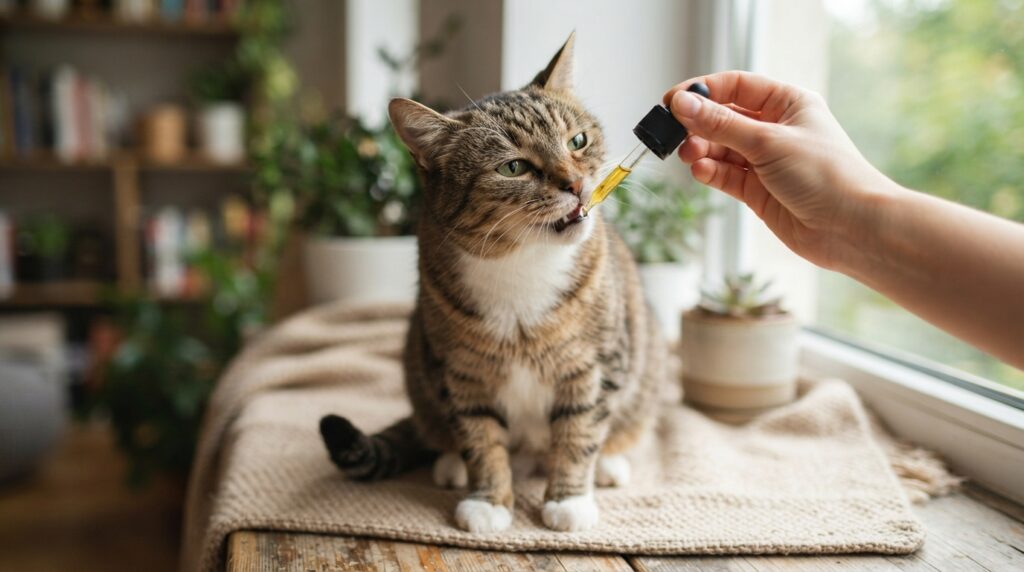
A shelf of near-identical bottles invites a shortcut. Pick the cheapest, pick the prettiest, pick whichever has a five-star badge. Shortcuts like these explain why so many owners end up with a half-used bottle in the back of a cabinet.
A more reliable method starts with the cat and works outward. The right CBD oil for cats for a ten-year-old with kidney changes will differ from the right choice for a healthy four-year-old that bolts at the sight of a syringe, and both will differ from a product chosen for a kitten (which is a case for waiting, not shopping).
The scenarios and checks below are built to shrink a crowded shelf down to two or three candidates worth asking a vet about.
Match the Drops to the Situation
The Healthy Indoor Adult
An adult cat in good health with a steady routine is the simplest case. The main questions are product quality and tolerance. A vet check and baseline bloodwork still make sense, and the product should come with a batch-specific lab report that shows THC results.
Start with the smallest bottle available. Even a cat that loves the first week can lose interest, and unopened oil keeps better than a bottle left half full for months.
The Senior Cat
Cats age 11 and older are in the senior life stage under AAFP and AAHA guidelines, and many carry quiet conditions such as kidney disease, thyroid problems, or arthritis. Each one changes how the body handles supplements and medications.
For seniors, the vet conversation comes before anything else. The product should be simple, free of extras, and easy to stop if a problem appears.
The Picky Eater
Some cats detect a change in food from across the room. For these animals, a carrier oil that smells mild matters. MCT oil is neutral, and fish-based oils can attract cats, though they spoil faster once opened.
If the cat refuses a flavored product, an unflavored version delivered by syringe is often easier than hiding it in food. Hiding oils in a favorite meal can turn that meal into a source of suspicion.
The Multi-Cat Home
Homes with several cats need to prevent cross-feeding. A cat that gets into a neighbor’s bowl may receive far more than intended. Feeding in separate rooms, with doors closed until bowls are empty, solves most of the problem.
Bottles should be easy to identify, with each cat’s amount written on a note. Mixing up two cats’ instructions is a common source of error.
The Nervous Traveler
Cats that dislike the carrier or the car are common candidates for calming products, and owners should know that research on CBD for travel stress in cats is lacking. Better-supported steps include leaving the carrier out as furniture, using a towel with a familiar scent, and asking the vet about prescription options for severe cases.
Any new product should be tried at home well before a trip. A cat’s first reaction to something unfamiliar should never happen in a hotel room.
Scenario Summary
| Cat | Priority | Check first |
|---|---|---|
| Healthy adult | Product quality | Batch lab report with THC result |
| Senior | Medical review | Bloodwork and medication list |
| Picky eater | Taste and smell | Carrier oil and delivery method |
| Multi-cat home | Separation | Feeding setup and labeled instructions |
| Traveler | Test early | Reaction at home, vet input on alternatives |
Check What Is in the Bottle
Strength Per Milliliter
Strength determines how small the measured amount will be. A high-strength product requires a tiny volume for a small cat, which makes accurate measuring harder. A moderate strength allows a larger, more measurable amount.
The number to find is milligrams of CBD per milliliter. If a label gives only the total in the bottle, divide by the bottle’s volume to find it.
Carrier Oil
The carrier makes up most of the bottle. MCT oil, hemp seed oil, olive oil, and salmon oil all appear in pet products. Cats with a history of pancreatitis or digestive upset should have the carrier reviewed by a vet, since a change in dietary fat can matter.
A short, clear ingredient list is easier to evaluate than a long one. Anything that is not hemp extract or a plain carrier deserves a question.
Flavor and Scent
Flavor sells to humans more than to cats. Cats cannot taste sweetness, so sugary or fruity flavors serve no purpose. A mild natural flavor such as salmon or chicken may help acceptance, while artificial flavors add unneeded ingredients.
Citrus and mint scents, common in human products, can repel cats and should be avoided.
Bottle and Packaging
Amber or dark glass protects oil from light, which speeds spoilage. A dropper or a syringe in the box is a plus. Clear plastic bottles left on a sunny shelf are a quiet red flag for a product that may have aged before purchase.
Check for a tamper-evident seal, a printed batch number, and an expiration date. Missing details point to sloppy handling.
Decide and Confirm
Build a Shortlist
Narrow the field to two or three products that meet the basics: stated CBD per milliliter, batch-specific lab report, clear ingredients, and a physical address for the manufacturer. Print or save the lab reports and bring them to the vet.
Comparing finalists on cost per milligram helps, though price should never override quality. The cheapest bottle that lacks a report is not a bargain.
Ask the Seller Questions
A fair set of questions: Which lab tests each batch? Can the full report be sent? Where is the hemp grown? Is the product made in a facility that follows good manufacturing practices? Is a National Animal Supplement Council seal held, and is it current?
Responses reveal a lot. Prompt, specific answers suggest a company that expects scrutiny. Vague replies suggest the opposite.
Run a Time-Limited Trial
Set a start date, a review date four to six weeks later, and a clear idea of what success looks like. Write that goal down before beginning, such as fewer litter box accidents or less nighttime pacing, so the result is judged against something concrete.
A log of daily observations will make the review meaningful instead of anecdotal.
When to Switch or Stop
Switch products only for a clear reason, such as a failed lab report or a flavor the cat will not tolerate, and change one thing at a time. Stop entirely if the cat shows any concerning signs or the trial ends with no benefit.
Stopping is not failure. It is a result, and it saves money.
Final Thoughts
The right drops depend on the cat’s age, health, temperament, and household. A short list of checks on strength, carrier oil, packaging, and lab reports narrows the field fast. A vet should review the finalists before the first dose. A trial with a defined goal and an end date keeps the decision grounded in results.